
Micronutrients at a Glance: Vitamins and Minerals Your Body Relies On
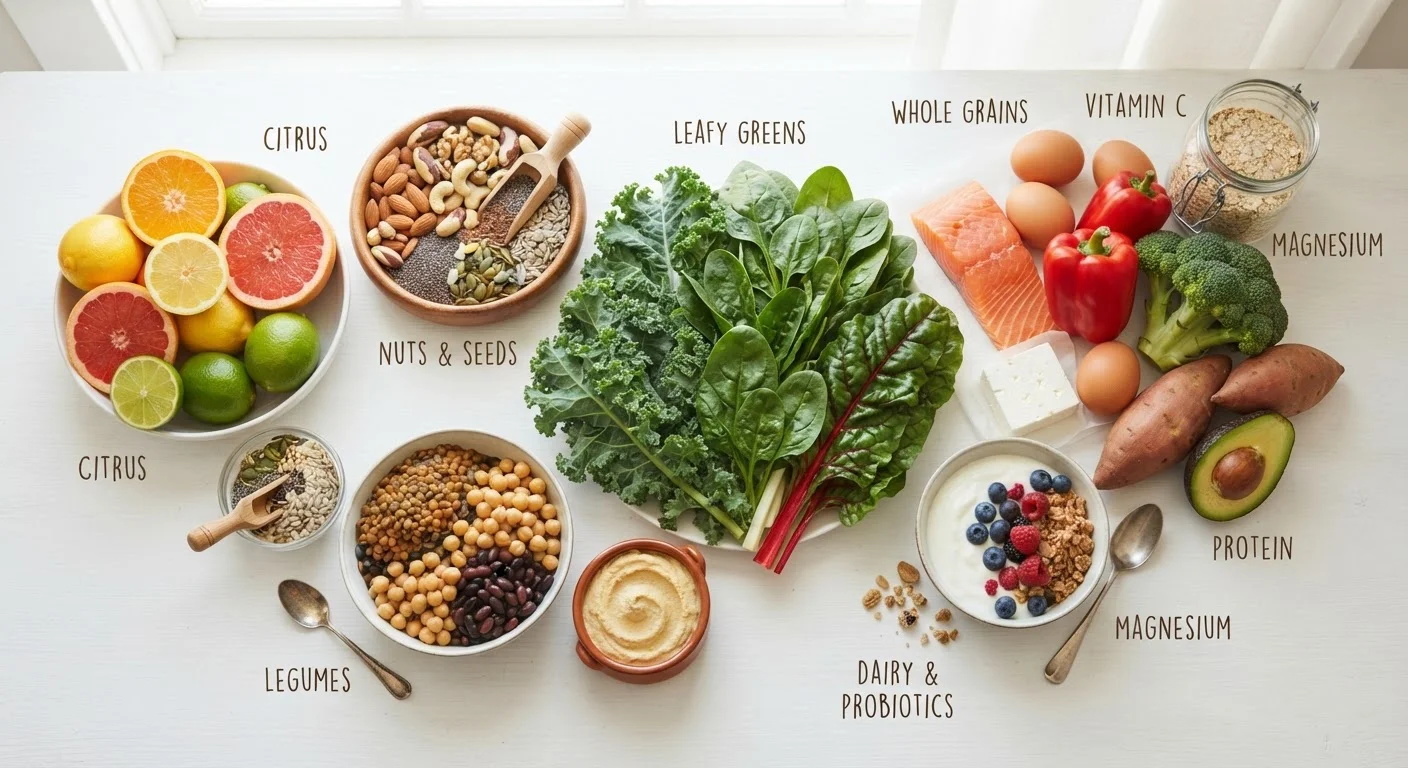
Photo credit: TheBlogZappier.com | Simple Search, Credible Results
In this article
A concise reference covering key vitamins and minerals, their roles in the body, and common food sources for each.
What Are Micronutrients and Why Do They Matter?
Micronutrients are vitamins and minerals your body needs in relatively small amounts - but their impact is far from small. They regulate nearly every biological process: energy production, immune defense, bone maintenance, cell repair, and nerve signaling all depend on a steady micronutrient supply.
Unlike macronutrients (carbohydrates, proteins, and fats), micronutrients provide no calories. Instead, they act as essential co-factors - enabling enzymes and metabolic reactions that keep your systems running. To understand how micronutrients fit into the broader picture of nutrition, see our guide to macronutrients and, if you're starting from scratch, Understanding Nutrition for the First Time.
The two main categories are vitamins (organic compounds) and minerals (inorganic elements). Both must come primarily from food, since the body either cannot produce them or cannot make them in sufficient quantities on its own.
Micronutrient
A vitamin or mineral required by the body in small amounts to support essential biological functions. Unlike macronutrients, micronutrients provide no caloric energy.
Fat-soluble vitamin
A vitamin (A, D, E, or K) that dissolves in fat and is stored in body tissues. Because these accumulate, both deficiency and overconsumption over time carry health implications.
Water-soluble vitamin
A vitamin (C or the B vitamins) that dissolves in water and is not stored in large quantities. Regular dietary intake is necessary since excess amounts are typically excreted.
Bioavailability
The proportion of a nutrient from food or a supplement that the body can actually absorb and use. Bioavailability varies by food source, preparation method, and individual health factors.
Daily Value (%DV)
A reference number used on U.S. nutrition labels to show how much of a nutrient a serving provides relative to a standard 2,000-calorie daily diet. It helps consumers compare nutrient content across foods.
Trace mineral
A mineral required in very small quantities - such as zinc, iron, selenium, or iodine - that still plays critical roles in metabolism, immune function, and other physiological processes.
Key Vitamins: Roles and Food Sources
Vitamins are classified by how the body stores and transports them:
- Fat-soluble vitamins (A, D, E, K) are stored in body fat and the liver, meaning they accumulate over time. This makes both deficiency and excess possible.
- Water-soluble vitamins (C and the B-complex family) are not stored in large quantities; excess is generally excreted in urine, so regular dietary intake is important.
Below are the vitamins most commonly discussed in public health nutrition:
| Vitamin | Primary Role | Common Food Sources |
|---|---|---|
| A (Retinol) | Vision, immune function, skin integrity | Liver, dairy, orange/yellow produce, leafy greens |
| C (Ascorbic acid) | Collagen synthesis, antioxidant defense, iron absorption | Citrus fruit, bell peppers, kiwi, broccoli |
| D (Calciferol) | Calcium absorption, bone health, immune modulation | Fatty fish, fortified dairy/plant milks, egg yolks, sunlight exposure |
| E (Tocopherol) | Antioxidant, cell membrane protection | Nuts, seeds, vegetable oils, spinach |
| K | Blood clotting, bone metabolism | Leafy greens, fermented foods, some vegetable oils |
| B1 (Thiamine) | Energy metabolism, nerve function | Whole grains, legumes, pork |
| B12 (Cobalamin) | Red blood cell formation, neurological function, DNA synthesis | Meat, fish, dairy, eggs, fortified plant foods |
| Folate (B9) | DNA synthesis, cell division, fetal neural development | Legumes, leafy greens, fortified grains |
| Total recognized vitamins | 13 essential vitamins (National Institutes of Health, Office of Dietary Supplements) |
| Fat-soluble vitamins | A, D, E, K |
| Water-soluble vitamins | C and eight B vitamins |
| Minerals classified as macrominerals | Calcium, phosphorus, magnesium, sodium, potassium, chloride, sulfur |
| High %DV threshold (U.S. labels) | 20% DV or more per serving (U.S. Food and Drug Administration) |
| Nutrients commonly under-consumed in the U.S. | Vitamin D, calcium, potassium, dietary fiber (2020-2025 Dietary Guidelines for Americans) |
Essential Minerals: What Each One Does
Minerals are divided into macrominerals (needed in larger amounts, such as calcium and magnesium) and trace minerals (needed in very small quantities, such as iron and zinc).
42%
U.S. adults with vitamin D insufficiency
A large nutritional survey published in Nutrition Research estimated that approximately 42% of U.S. adults had insufficient vitamin D levels.
~10%
U.S. women of childbearing age with iron deficiency
The CDC estimates iron deficiency affects roughly 10% of U.S. women of childbearing age, making it one of the most common micronutrient gaps in the country.
2 billion
People worldwide affected by micronutrient deficiencies
The World Health Organization has described micronutrient deficiency as a global public health challenge affecting roughly 2 billion people, particularly iron, iodine, and vitamin A.
| Mineral | Primary Role | Common Food Sources |
|---|---|---|
| Calcium | Bone and tooth structure, muscle contraction, nerve signaling | Dairy, fortified plant milks, tofu, leafy greens |
| Iron | Oxygen transport (hemoglobin), energy metabolism | Red meat, legumes, fortified cereals, spinach |
| Magnesium | Enzyme reactions, muscle and nerve function, blood glucose regulation | Nuts, seeds, whole grains, dark leafy greens |
| Potassium | Blood pressure regulation, fluid balance, heart rhythm | Bananas, potatoes, legumes, dairy |
| Zinc | Immune function, wound healing, protein synthesis | Meat, shellfish, legumes, nuts, seeds |
| Iodine | Thyroid hormone production, metabolism regulation | Iodized salt, seafood, dairy |
| Selenium | Antioxidant enzymes, thyroid function | Brazil nuts, seafood, poultry, whole grains |
When shopping for micronutrient-rich foods, a nutrition-focused grocery checklist can help you build balanced purchases across each category.
Reading Labels and Spotting Gaps
Nutrition labels in the United States list the % Daily Value (%DV) for select vitamins and minerals, based on a 2,000-calorie reference diet. A %DV of 20% or more is generally considered high; 5% or less is considered low. Importantly, labels only list a subset of micronutrients - the full picture comes from the variety of foods in your overall diet.
Common gaps identified in population nutrition surveys include vitamin D, calcium, potassium, and dietary fiber. Plant-based and restrictive diets may also need closer attention to B12, iron, zinc, and iodine, since many of these are more bioavailable - meaning more readily absorbed and used by the body - from animal sources.
For a practical walkthrough of how to interpret every section of a food label, see Reading a Nutrition Label Without the Confusion.
Supplements vs. Food Sources
While dietary supplements can help address documented deficiencies, nutrition researchers and health authorities generally recommend obtaining micronutrients through whole foods when possible. Whole foods deliver nutrients alongside fiber, phytochemicals, and other compounds that supplements do not replicate. If you are considering supplementation, a registered dietitian or physician can assess whether it's appropriate for your individual needs.
This article is for general informational purposes only and does not constitute medical or nutritional advice. Consult a qualified healthcare provider or registered dietitian before making changes to your diet, especially if you have a health condition or take medications.

Author
Health & Wellness Editorial Team
Health & Wellness Editorial Team is the collective byline for our editorial team and contributor network. Articles published under this byline or an editorial pen name are researched, written, and reviewed according to our editorial standards for clarity, consistency, and independence before publication.
View all articles →