
Exercise Across a Lifetime: How Movement Needs Shift With Age
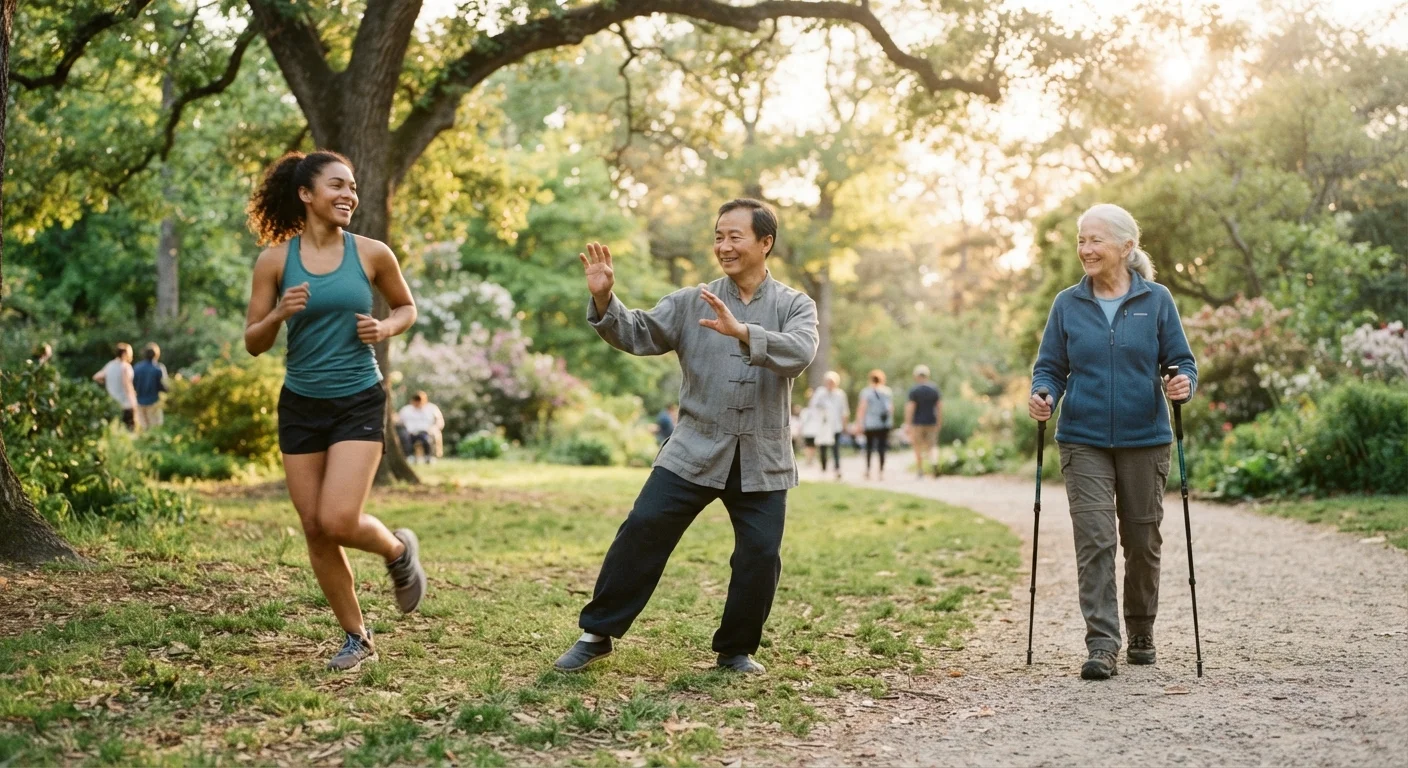
Photo credit: TheBlogZappier.com | Simple Search, Credible Results
In this article
Physical activity looks different at 25, 45, and 65. This guide covers how fitness priorities and safe practices evolve through key life stages.
Key Takeaways
- Fitness priorities shift meaningfully across each decade of life, but regular movement remains essential throughout.
- Strength training becomes increasingly important from the 40s onward to counter natural muscle and bone density loss.
- Mobility and balance work deserve more attention as we age, reducing injury and fall risk significantly.
- No single exercise format is ideal for every life stage - flexibility to adapt is itself a fitness skill.
- Even modest daily movement delivers measurable health benefits at any age.
Why Movement Needs Change Over Time
Physical activity is not a fixed prescription. The body at 25 recovers quickly, builds muscle readily, and tolerates high training volumes with relative ease. By 55, the same approach may lead to injury or burnout. Understanding why these shifts happen makes it far easier to adapt intelligently rather than struggle against biology.
Several interrelated processes drive the changes: hormonal fluctuations, gradual loss of muscle mass (called sarcopenia), declining bone density, reduced joint cartilage, and slower cardiovascular recovery. None of these are reasons to exercise less - they are reasons to exercise smarter.
Equally important is the psychological dimension. Movement is deeply connected to mental wellbeing at every age. See our guide to mental wellbeing across the lifespan for a parallel look at how emotional needs evolve alongside physical ones.
This article provides general health information and is not a substitute for advice from a qualified healthcare professional. Always consult your doctor before starting or significantly changing an exercise routine.
Your 20s and 30s: Building the Foundation
These decades represent a biological window when the body is most responsive to training. Muscle mass peaks around the late 20s, and bone density continues building into the early 30s, making this the ideal time to invest in both.
Key priorities
- Cardiovascular fitness: The heart and lungs adapt rapidly at this stage. Mixing moderate-intensity steady-state cardio with higher-intensity intervals builds an aerobic base that pays dividends for decades.
- Strength training: Resistance work during this period builds peak muscle mass and bone density - a kind of biological savings account against later-life loss. Explore how to balance strength and cardio effectively.
- Movement variety: Experimenting with different formats - group classes, solo runs, recreational sports - helps identify what you genuinely enjoy, which is the strongest predictor of long-term consistency.
In your 20s and 30s, treat strength training like a long-term investment - every session now is depositing into a muscle and bone reserve you'll draw on in later decades.
Peak bone density is largely set by the early 30s, and higher peak mass provides a buffer against age-related losses that begin shortly after.
If recovery feels noticeably slower after a hard session, treat that as data rather than a problem - it's a cue to space intensity sessions further apart and add one more recovery-focused day.
Research on training adaptation consistently shows that recovery time is where physiological gains consolidate; compressing it chronically leads to stagnation or injury.
One often-overlooked priority in this stage is non-structured daily movement. Research consistently shows that total daily activity, not just formal workouts, matters significantly for metabolic health. Learn more about NEAT and everyday movement.
Your 40s and 50s: Adapting and Preserving
Hormonal shifts - declining estrogen and testosterone - accelerate muscle loss, increase fat redistribution, and can reduce bone density. Recovery between sessions takes longer. Joints may feel less forgiving. None of this signals decline so much as a call to prioritize differently.
Key priorities
- Resistance training becomes non-negotiable: Adults begin losing roughly 3-8% of muscle mass per decade after 30, with the rate accelerating after 60. Strength training two to three times per week significantly slows this process.
- Mobility and flexibility: These often become limiting factors before strength does. Understanding the distinction - and training both - is worth dedicated time. Our article on mobility vs. flexibility explains what each requires.
- Managing sedentary time: Desk-based work and longer commutes increase sitting hours. Prolonged sitting carries its own health risks, separate from exercise levels - regular movement breaks matter.
Don't Push Through Joint Pain
Muscle soreness after exercise is normal, but sharp, localized, or persistent joint pain is not. In your 40s and beyond, cartilage and tendons recover more slowly than in earlier decades. Exercising through genuine pain can worsen an underlying issue significantly. If pain persists beyond a few days or recurs consistently with specific movements, consult a healthcare provider before continuing that activity.
Your 60s and Beyond: Moving for Longevity
Physical activity in later life is one of the most robustly supported interventions for healthy aging in the scientific literature. It is associated with reduced risk of cardiovascular disease, type 2 diabetes, cognitive decline, and fall-related injury. The goal shifts from performance toward functional independence - the capacity to move through daily life with ease and confidence.
Key priorities
- Balance training: Falls are a leading cause of injury in older adults. Simple balance exercises - standing on one foot, heel-to-toe walking - build the neuromuscular control that prevents them.
- Low-impact cardiovascular activity: Walking remains one of the most evidence-backed options at this stage. See what the research actually says about walking as exercise.
- Continued strength work: Light to moderate resistance training remains appropriate and beneficial well into older adulthood, though form and recovery time deserve more attention.
- Social movement formats: Group exercise settings offer accountability and social connection - both meaningful for wellbeing. Group exercise vs. solo training walks through the trade-offs.
Anyone with existing health conditions, recent surgery, or new symptoms should consult a physician before beginning or modifying an exercise program.
The Constants: What Never Changes
Across every decade, a few principles hold steady regardless of age or fitness level.
3-8%
Muscle mass lost per decade after age 30
According to research published in the Journal of Cachexia, Sarcopenia and Muscle, this rate accelerates after age 60 without resistance training.
150 min
Weekly moderate aerobic activity recommended for adults
The U.S. Department of Health and Human Services Physical Activity Guidelines for Americans recommend at least 150 minutes of moderate-intensity activity per week for most adults.
28%
Lower all-cause mortality risk among active older adults
A systematic review in the British Journal of Sports Medicine found that regular physical activity was associated with substantially lower mortality risk in adults over 60.
- Consistency outperforms intensity: A moderate routine practiced reliably over years produces far greater health benefits than sporadic bursts of high effort.
- Rest is part of training: Recovery is when the body adapts. Skipping it - at any age - increases injury risk and reduces progress.
- Enjoyment drives adherence: People sustain what they find rewarding. If a format feels like punishment, finding one that doesn't is not a compromise - it's smart strategy.
- Movement is cumulative: Short bouts of activity throughout the day add up. Ten minutes three times a day delivers real benefits comparable, in many studies, to a single 30-minute session.
The most important exercise habit is the one you can maintain. Starting where you are - even if that's a daily walk - and building gradually is both safer and more effective than pursuing an idealized program that doesn't fit your life.
This content is for general informational purposes only and does not constitute medical advice. Consult a qualified healthcare professional for guidance tailored to your individual health circumstances.

Author
Health & Wellness Editorial Team
Health & Wellness Editorial Team is the collective byline for our editorial team and contributor network. Articles published under this byline or an editorial pen name are researched, written, and reviewed according to our editorial standards for clarity, consistency, and independence before publication.
View all articles →