
Manual vs Automatic Transmission: How Each One Works
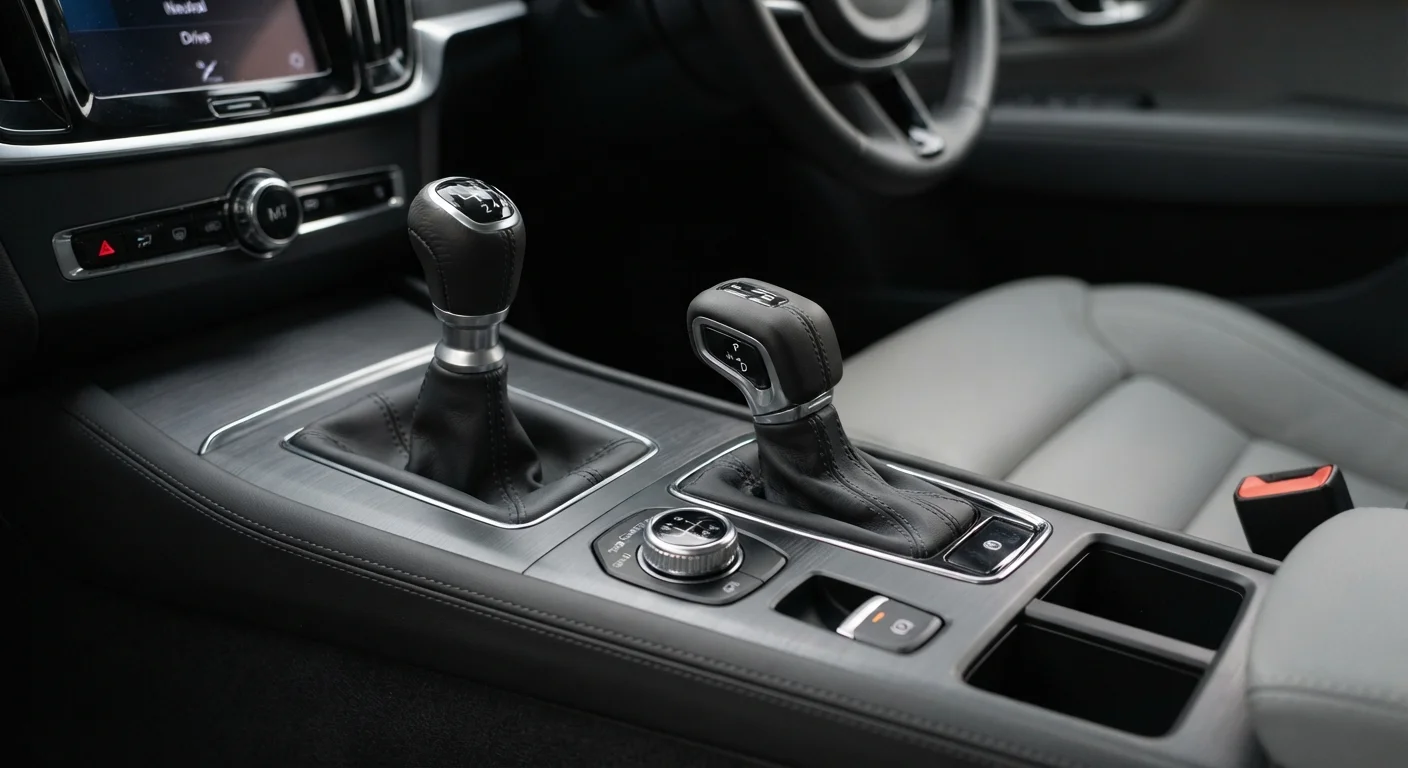
Photo credit: TheBlogZappier.com | Simple Search, Credible Results
In this article
Understand the mechanical and practical differences between manual and automatic gearboxes before you get behind the wheel.
Key Takeaways
- Manual transmissions require the driver to manually engage a clutch pedal and select gears via a stick shift.
- Automatic transmissions use a torque converter and hydraulic system to shift gears without driver input.
- Manual gearboxes generally have fewer components, which can mean lower repair costs when issues arise.
- Automatics dominate the US market and are standard in most new vehicles sold today.
- Neither type is universally superior - the right choice depends on driving habits, terrain, and personal preference.
How a Manual Transmission Works
A manual transmission - sometimes called a stick shift or standard transmission - connects the engine to the drivetrain through a system the driver operates directly. The key components are the clutch, the gearbox, and the gear selector (the stick shift itself).
When you press the clutch pedal, a friction disc disengages from the engine's flywheel, temporarily breaking the power connection. This allows you to move the gear selector between ratios without grinding the gears. Releasing the clutch smoothly re-engages that connection, transferring engine power to the wheels at the selected gear ratio.
Each gear ratio is optimized for a range of vehicle speeds. Lower gears (1st, 2nd) multiply torque - rotational force - allowing the engine to move a stationary vehicle or climb steep grades. Higher gears reduce engine RPM (revolutions per minute) at highway speeds, which generally improves fuel efficiency and reduces engine wear. To understand how the engine generates this torque in the first place, see our engine explainer.
Most passenger car manual gearboxes offer five or six forward gears and one reverse. Coordinating the clutch, throttle, and gear selector requires practice - particularly hill starts and smooth low-speed maneuvering - but becomes instinctive with experience.
How an Automatic Transmission Works
An automatic transmission performs gear selection on the driver's behalf, using a combination of hydraulic pressure, sensors, and mechanical components. The driver selects a drive mode (Park, Reverse, Neutral, Drive) and the transmission manages everything else.
The central component replacing the manual clutch is the torque converter. This fluid coupling sits between the engine and transmission and transfers rotational power without a direct mechanical lock, allowing the vehicle to idle in gear without stalling. At higher speeds, a lock-up clutch inside the torque converter engages to improve efficiency.
Inside the gearbox, a series of planetary gear sets - compact arrangements of sun, planet, and ring gears - provide multiple gear ratios. A hydraulic control system, guided by the transmission control module (a small onboard computer), pressurizes fluid to activate clutch packs and bands that engage the correct gear set for current speed and throttle demand.
Modern automatics typically offer six to ten forward gears, allowing finer steps between ratios that keep the engine operating in its most efficient range. Some vehicles also offer a continuously variable transmission (CVT), which uses a belt-and-pulley system to vary gear ratios seamlessly rather than in distinct steps.
| Criterion | Manual Transmission | Automatic Transmission |
|---|---|---|
| Gear selection | Driver-controlled via stick shift | Computer-controlled automatically |
| Clutch pedal | Required - 3 pedals total | Not present - 2 pedals total |
| Key mechanism | Friction clutch disc and flywheel | Torque converter and planetary gears |
| Typical gear count | 5-6 forward gears | 6-10 forward gears (or CVT) |
| Driver skill requirement | Higher - coordination needed | Lower - simpler to operate |
| Repair complexity | Generally simpler and lower cost | More complex; can be costlier |
| US market prevalence | Declining - limited to select models | Dominant - standard on most new vehicles |
Practical Differences Every Driver Should Know
The mechanical distinctions translate directly into everyday driving experience, ownership costs, and maintenance needs.
Driving effort: Manual drivers manage three pedals and active gear selection at all times. This adds cognitive and physical load - particularly in dense traffic - but gives precise control over the vehicle's power delivery. Automatic drivers manage two pedals and far less decision-making while moving.
Maintenance considerations: Clutch components in a manual transmission wear over time and will eventually need replacement - the interval depends heavily on driving technique and conditions. Automatic transmissions rely on transmission fluid to lubricate and actuate their hydraulic systems; this fluid degrades and typically requires periodic replacement. Automatic repairs, when they occur, tend to be more complex and expensive due to the system's interdependent components. For a broader look at fluid and mechanical upkeep, the car maintenance hub covers routine service schedules in detail.
Market availability: In the US, automatic transmissions are standard on the overwhelming majority of new vehicles. Manual options have become increasingly limited to specific segments - sports cars, some trucks, and a handful of economy models.
A Note on Electric Vehicles
Electric vehicles (EVs) use neither a traditional manual nor automatic transmission. Because electric motors deliver power across a wide RPM range without the narrow efficiency band of a combustion engine, most EVs use a single fixed-ratio gearbox. There is no gear shifting at all. This is one of several ways EVs differ fundamentally from combustion-engine vehicles - a distinction worth keeping in mind as the market continues to shift.
Understanding how your transmission interacts with the drivetrain is also relevant when considering front-wheel, rear-wheel, and all-wheel drive systems, since power delivery and traction behavior vary across those configurations.

Author
Autos & Driving Editorial Team
Autos & Driving Editorial Team is the collective byline for our editorial team and contributor network. Articles published under this byline or an editorial pen name are researched, written, and reviewed according to our editorial standards for clarity, consistency, and independence before publication.
View all articles →