
Synthetic vs. Conventional Motor Oil
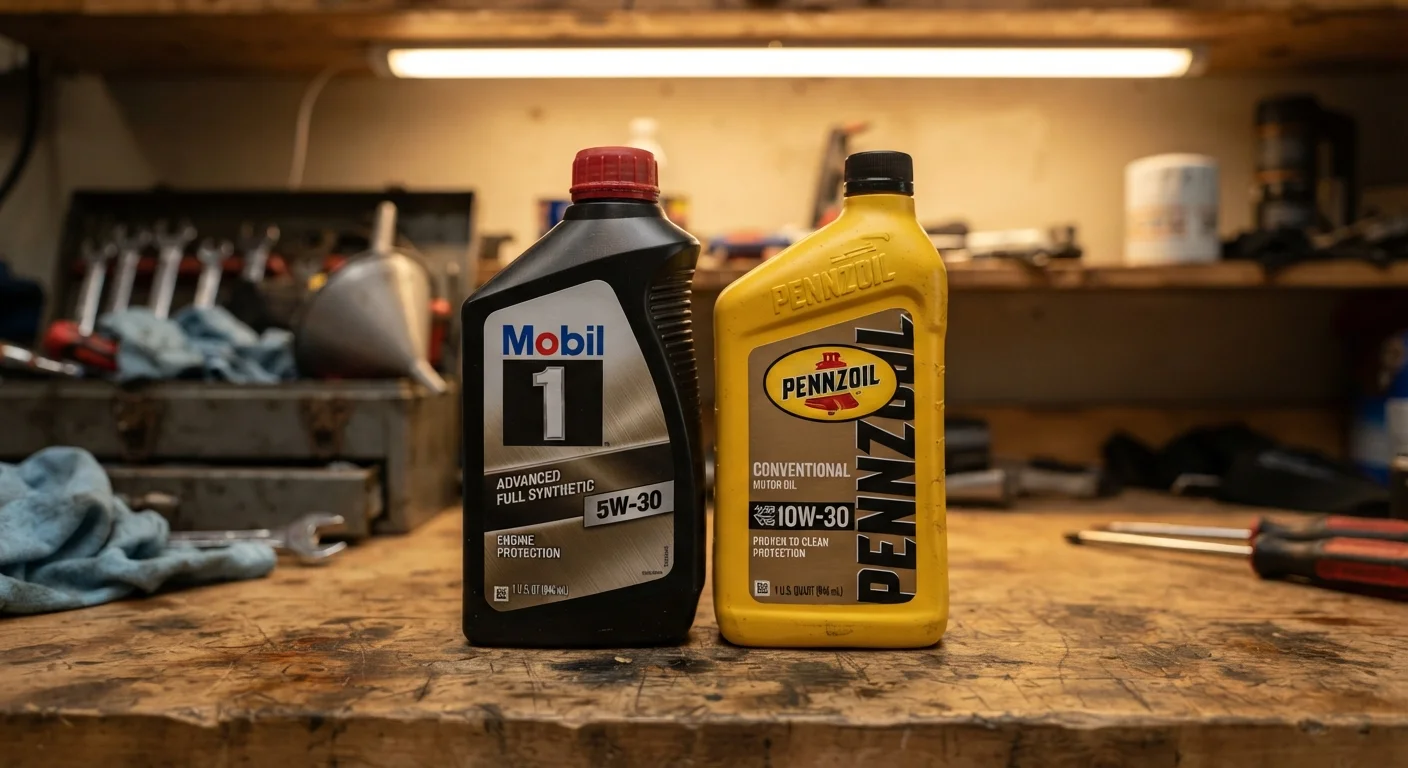
Photo credit: TheBlogZappier.com | Simple Search, Credible Results
In this article
A side-by-side look at how synthetic and conventional motor oils differ in composition, performance, and suitability for different engines.
Key Takeaways
- Synthetic oil is chemically engineered for greater consistency and performance than conventional oil.
- Conventional oil is refined from crude petroleum and is generally less expensive per quart.
- Synthetic oil typically allows longer change intervals, often 7,500 to 15,000 miles depending on the product and vehicle.
- Your owner's manual is the authoritative source for which oil type your engine requires.
- Switching between oil types is generally safe, but always verify compatibility with your vehicle's specifications.
- Neither oil type eliminates the need for regular maintenance - intervals still matter regardless of which you use.
What Sets These Two Oils Apart
Motor oil does one essential job: reduce friction between metal engine components while carrying away heat and contaminants. Both synthetic and conventional oils accomplish this, but they start from fundamentally different origins.
Conventional motor oil is refined directly from crude petroleum. The refining process removes many impurities, but the resulting base oil still contains naturally occurring variations in molecular size and structure. Additives are blended in to improve performance, but the base stock retains some inconsistencies inherent to its natural origin.
Synthetic motor oil is built differently. Its base oil is chemically synthesized - typically from compounds like polyalphaolefins (PAOs) - giving engineers precise control over molecular uniformity. This consistency translates to more predictable behavior under stress, including better resistance to oxidation, viscosity breakdown, and sludge formation.
Viscosity grades, such as 5W-30 or 10W-40, apply to both types. The numbers describe how the oil flows at cold temperatures (the first number) and at operating temperature (the second). Both oil types are available across common viscosity grades, so the grade your engine needs is independent of whether you use synthetic or conventional. For more on reading these specifications, see what the numbers in your manual really mean.
Performance Differences That Matter Day to Day
The molecular consistency of synthetic oil produces real-world advantages that show up in several situations drivers actually encounter:
- Cold starts: On cold mornings, oil must flow quickly to protect engine parts before the engine warms up. Synthetic oil's uniform molecules flow more freely at low temperatures, reaching critical components faster than conventional oil in many cases.
- High-temperature stability: Engines running hard - especially turbocharged engines - expose oil to sustained high heat. Synthetic oil resists thermal breakdown more effectively, reducing the risk of sludge buildup over time.
- Change intervals: Because synthetic oil degrades more slowly, many manufacturers approve longer intervals between changes - commonly in the range of 7,500 to 15,000 miles, compared to the traditional 3,000-5,000 miles often associated with conventional oil. That said, your vehicle's owner's manual sets the authoritative standard for your specific engine.
Conventional oil performs adequately in many standard driving conditions, particularly in older engine designs that were not engineered around synthetic's properties. If your vehicle's manufacturer specifies conventional oil, using synthetic may not provide meaningful additional benefit - and may cost more without a practical return.
| Criterion | Synthetic Motor Oil | Conventional Motor Oil |
|---|---|---|
| Base stock origin | Chemically synthesized compounds | Refined crude petroleum |
| Molecular consistency | Highly uniform | Naturally variable |
| Typical change interval | 7,500-15,000 miles (varies by vehicle) | 3,000-5,000 miles (varies by vehicle) |
| Cold-weather flow | Flows more readily at low temps | Thickens more at cold startup |
| High-temp stability | Stronger resistance to breakdown | More susceptible to thermal degradation |
| Cost per quart | Generally higher | Generally lower |
| Suitable engine types | Modern, turbocharged, high-performance | Older, simpler, light-duty engines |
Common misconceptions about oil persist among many drivers. If you're sorting through them, things new drivers misunderstand about engine oil addresses many of the most widespread ones.
Choosing the Right Oil - and Knowing When to Ask a Professional
The single most reliable guide to which oil your engine needs is your vehicle's owner's manual. It specifies the oil type, viscosity grade, and change interval the manufacturer engineered the engine around. Following that specification protects your warranty and your engine's longevity.
~10,000 mi
Common synthetic oil change interval
Many modern vehicle manufacturers now recommend oil changes every 7,500 to 10,000 miles for engines using full synthetic oil, though intervals vary by make, model, and driving conditions.
3-5×
Molecular uniformity advantage of synthetic
Industry sources note that the engineered base stocks in synthetic oil contain significantly fewer impurity variations than conventionally refined petroleum base oils.
A few practical considerations worth knowing:
- High-mileage formulations: Some oil products - both synthetic and conventional - are marketed for engines with higher mileage, often containing seal conditioners. These may be worth discussing with a mechanic if your engine is showing minor leaks or consumption.
- Mixing oil types: Combining synthetic and conventional oil in a pinch is generally not harmful, but it dilutes the performance properties of whichever type you prefer. It's not a long-term strategy.
- Diesel engines: Diesel engines have distinct lubrication requirements and typically call for oils meeting different specifications (such as API CK-4). Do not assume a passenger-car oil rating applies to a diesel engine.
Oil changes are one of the more approachable maintenance tasks, but there are good reasons many drivers leave it to a shop - proper disposal of used oil requires access to recycling facilities, and an improperly seated drain plug or filter can cause serious damage. Our breakdown of DIY car maintenance vs. taking it to a mechanic can help you weigh where an oil change fits in your own routine. For a broader look at vehicle ownership decisions, the auto ownership hub covers everything from insurance to ongoing upkeep.
This article is for general informational purposes only. Always consult your vehicle's owner's manual and, when in doubt, speak with a qualified mechanic before changing your maintenance routine.

Author
Autos & Driving Editorial Team
Autos & Driving Editorial Team is the collective byline for our editorial team and contributor network. Articles published under this byline or an editorial pen name are researched, written, and reviewed according to our editorial standards for clarity, consistency, and independence before publication.
View all articles →