
Your End-of-Month Budget Audit
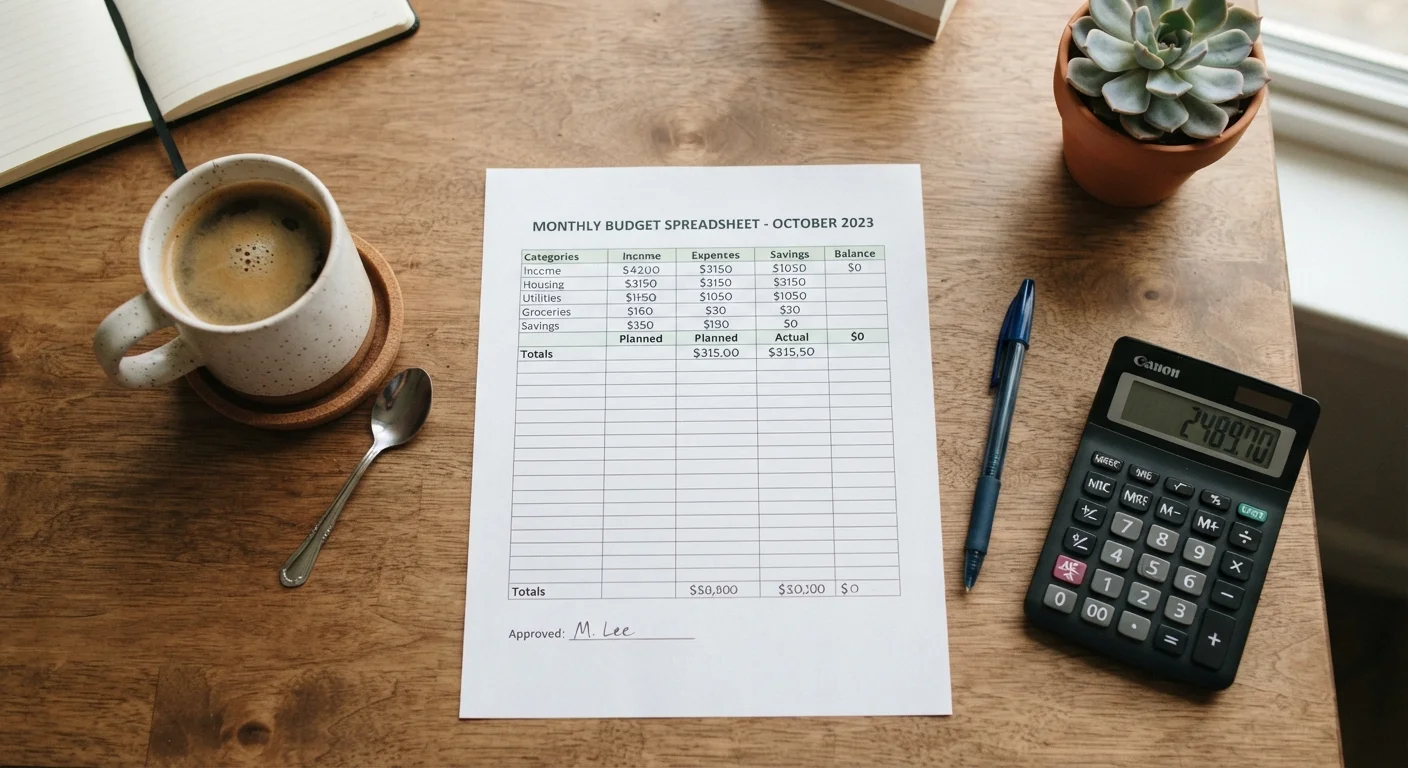
Photo credit: TheBlogZappier.com | Simple Search, Credible Results
In this article
A practical checklist for reviewing where your money went each month — categories to examine, questions to ask yourself, and what to adjust next cycle.
Key Takeaways
- A monthly audit reveals spending drift before it becomes a serious financial problem.
- Comparing actual spending to your plan — by category — is the core of any effective review.
- Irregular and discretionary expenses are the most common sources of budget overruns.
- Every audit should end with at least one concrete adjustment to next month's plan.
- Tracking patterns over multiple months is more useful than reacting to a single month's data.
Why a Monthly Audit Matters
Most budgets don't fail because of big, obvious mistakes. They unravel quietly — a few subscriptions you forgot about, takeout that snuck up on you, a car repair that wasn't budgeted for. A monthly budget audit is the habit that catches that drift early, before it compounds into real financial stress.
This checklist walks you through the categories to examine, the questions to ask, and what to do with what you find. If you haven't yet mapped where your money goes on a monthly basis, start with our spending tracker guide before working through this audit. And if you're building a budget for the first time, this walkthrough covers the full setup process.
Set aside 30 to 60 minutes at the end of each month. Gather your bank statements, credit card statements, and whatever budget document or app you're using. Then work through each section below.
Don't Rely on Memory Alone
It's tempting to estimate spending from memory, especially for cash purchases or small transactions. Memory-based reviews consistently undercount discretionary spending and miss irregular costs entirely. Always work from actual bank and card records to get an accurate picture.
What You'll Need Before You Start
Having the right information in front of you makes the audit faster and more accurate. Pull together the following before you begin:
Bank & Credit Card Statements
Provides an accurate record of every transaction made during the month.
Budget Document or Spreadsheet
Your planned spending by category — needed to compare actual versus intended amounts.
Budgeting App (e.g., any app that connects to your accounts)
Automatically categorizes transactions, making the comparison step faster and more reliable.
Calculator or Spreadsheet Software
Used to total category spending and calculate your overall net monthly position.
Notebook or Digital Notes
Record observations, patterns, and decisions from this month's audit for future reference.
If you use a budgeting app that automatically categorizes transactions, export or review last month's summary. If you track manually, total each spending category from your records. Either way, you want actual numbers — not estimates from memory.
The End-of-Month Audit Checklist
Work through each group in order. The goal isn't to judge your spending — it's to understand it clearly enough to make informed decisions next month. For a deeper look at why budgets often break down structurally, see why budgets fall apart mid-month for common structural fixes.
Income Check
Fixed Expenses
Variable & Discretionary Spending
Irregular & Unexpected Expenses
Savings & Debt Payments
Month-End Reconciliation
One Audit Won't Tell the Full Story
A single month of data can mislead you — one unusual expense or windfall distorts the picture. The real value of this checklist comes from repeating it every month and comparing results over time. After three months, patterns become clear and your adjustments become much more targeted. For more on the ongoing review habit, see the case for a monthly budget review.
What to Do With Your Findings
The audit is only useful if it leads to action. Once you've completed every group, answer these three questions before closing your records:
- Which category surprised me most? Identify the one area where actual spending diverged furthest from your plan. That's where to focus first next month.
- Is the variance a one-time event or a pattern? A single month of high medical costs is different from three consecutive months of overspending on dining. Patterns require structural changes; one-off events may just need a buffer.
- What is one specific thing I'll do differently next month? Broad intentions don't work. A specific change — like setting a weekly grocery limit or canceling two subscriptions — does.
Once you've made your adjustments, you have a revised plan for next month. Over time, this process feeds directly into longer-term goals. When your spending is under control, you're better positioned to explore saving and investing strategies or to address credit and debt management challenges. Financial stress can also affect your overall wellbeing — consider pairing this habit with a monthly mental wellbeing check-in to get a fuller picture of how things are going.
This article is for general informational and educational purposes only. It does not constitute personalized financial, tax, or legal advice. For guidance specific to your situation, consider consulting a licensed financial professional.

Author
Money & Finance Editorial Team
Money & Finance Editorial Team is the collective byline for our editorial team and contributor network. Articles published under this byline or an editorial pen name are researched, written, and reviewed according to our editorial standards for clarity, consistency, and independence before publication.
View all articles →