
Why Your Policy's Declarations Page Is the First Thing You Should Read
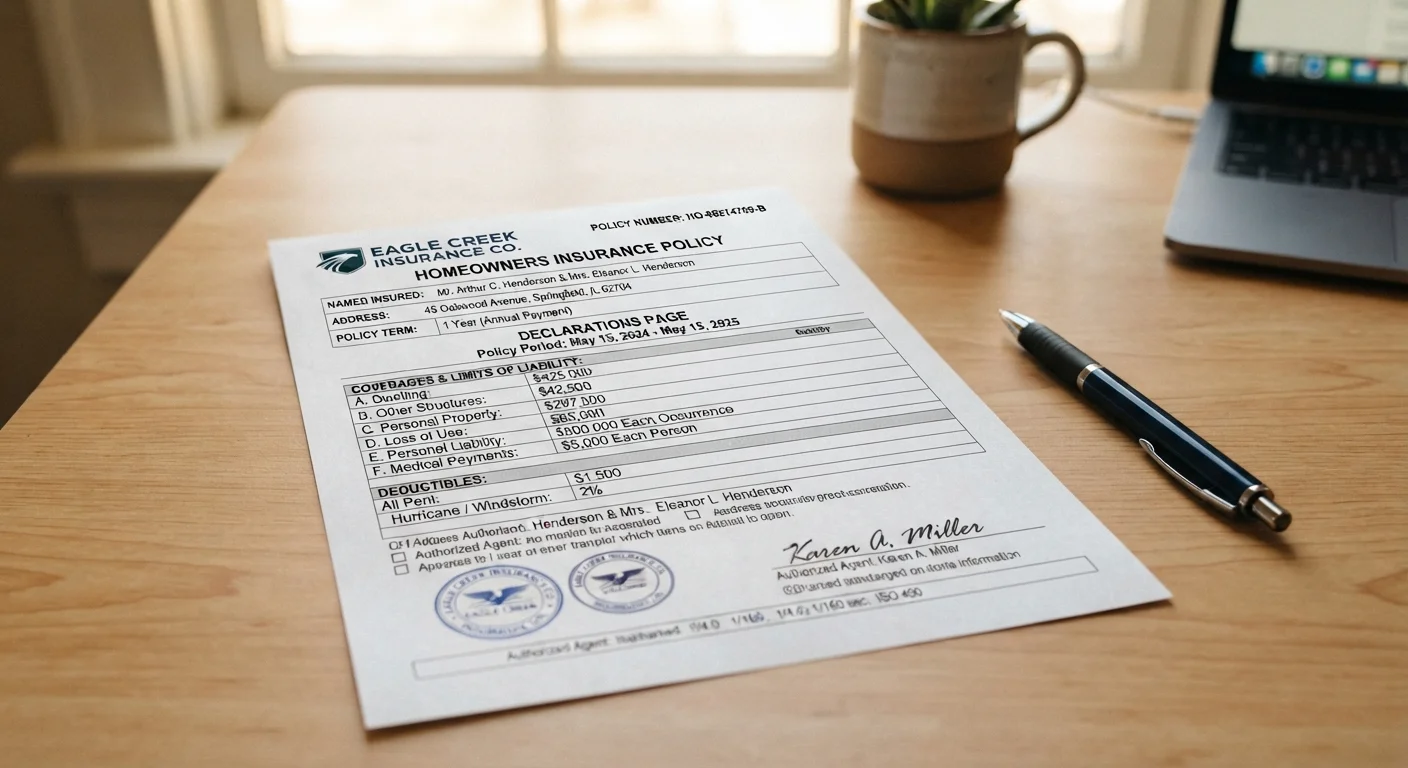
Photo credit: TheBlogZappier.com | Simple Search, Credible Results
In this article
The declarations page summarises your entire policy on one sheet. Learn what every line on it means and how to spot errors before they cause problems.
Key Takeaways
- The declarations page summarises your policy's coverage, limits, premiums, and deductibles in one place.
- Errors on this page — wrong address, incorrect coverage amount — can affect your claims outcome.
- Key terms like deductible, premium, and exclusions have specific meanings that change what you owe.
- Reviewing your declarations page at renewal can catch changes you did not knowingly approve.
- The declarations page does not replace the full policy — it points you to where the details live.
What the Declarations Page Actually Is
When an insurer issues a policy, they produce a short summary document — typically one to three pages — called the declarations page (often shortened to "dec page"). It sits at the front of your policy packet and condenses the most critical details of your coverage into a scannable format. Think of it as the cover sheet that tells you what you bought, for how much, and for how long.
Every type of insurance — home, auto, renters, life — includes a declarations page, and while the exact layout varies by insurer and policy type, the core fields are consistent. Before diving into the dense contract language that follows, reading the declarations page first gives you an accurate map of the whole document. If you're just getting started with home coverage, the Home Insurance for First-Time Policyholders explains the underlying coverage types in plain terms.
Errors Here Can Affect Your Claim
Because the declarations page establishes the binding terms of your coverage, any inaccuracy — a misspelled name, an outdated address, or a wrong coverage limit — can create complications when you file a claim. Review every field carefully when you first receive a policy and again at each renewal. Contact your insurer or licensed agent promptly if anything looks incorrect.
The Key Terms You'll Encounter and What They Mean
Understanding what each field on the declarations page represents prevents misreading your own coverage. Here are the terms most commonly listed:
- Named insured: The person or entity the policy legally covers. Verify the spelling and any co-insured parties are correct.
- Policy period: The start and end dates of coverage. Claims for events outside this window are generally not covered.
- Premium: The amount you pay — monthly, semi-annually, or annually — to keep the policy active. This is what you owe the insurer regardless of whether you file a claim.
- Coverage limits: The maximum amount the insurer will pay for a covered loss. A limit of $200,000 on a dwelling means the insurer pays no more than that figure for a qualifying claim on the structure.
- Deductible: The portion of a covered loss you pay out of pocket before the insurer's payment begins. A $1,000 deductible means a $5,000 covered loss results in a $4,000 insurer payment.
- Endorsements and riders: Add-ons that modify the standard policy — expanding or restricting coverage. They are listed by name or code on the dec page and detailed in separate attached documents.
For a broader glossary of these and related terms, see The Insurance Terms Every First-Time Policyholder Should Know.
Keep a Digital Copy Within Easy Reach
Store a digital copy of your declarations page in a secure, easily accessible location — such as a cloud folder or email to yourself. If a loss event occurs, having this summary on hand helps you quickly confirm your policy number, insurer contact details, and coverage limits without hunting through paper files.
How to Read Your Declarations Page Step by Step
Work through the declarations page systematically rather than skimming. The steps below apply whether you've just received a new policy or are reviewing one at renewal.
Confirm the Named Insured and Policy Number
Check that your full legal name — and any co-insured's name — is spelled correctly. Also verify the property address or vehicle description matches the actual item being insured. Record your policy number somewhere accessible; you'll need it if you contact the insurer or file a claim.
Verify the Policy Period
Locate the coverage start and end dates. Confirm the policy is currently active and note the renewal date on your calendar. A lapse — even a short one — can leave you without coverage and may affect your rates when you reinstate.
Review Every Coverage Limit
Each category of coverage — dwelling, liability, personal property, medical payments, and so on — will have its own listed limit. Ask yourself whether each limit still reflects your actual situation. Property values change, and a limit that was adequate two years ago may no longer be sufficient today.
Identify Your Deductible for Each Coverage Type
Some policies carry a single deductible; others apply separate deductibles to specific perils — for example, a standard deductible for most claims and a higher percentage-based deductible for wind or hail. Knowing your deductibles before a loss occurs helps you plan financially and evaluate whether a small claim is worth filing.
Check Your Premium and Payment Schedule
Confirm the premium matches what you agreed to pay and that the payment schedule (monthly, semi-annual, annual) aligns with your expectations. If the amount has changed since your last renewal, you're entitled to an explanation from your insurer.
Note Any Endorsements or Riders
Endorsements are listed on the declarations page by name or form number. Each one modifies the standard policy language. Make a note of any unfamiliar codes and locate the corresponding attached form in your policy packet. This is especially important for coverage expansions you specifically requested — confirm they appear here. For more on how exclusions work alongside endorsements, see what insurance exclusions actually mean.
Don't Confuse the Dec Page With Full Coverage Details
The declarations page is a summary, not the complete contract. Exclusions, conditions, and definitions that govern what is and is not covered are spelled out in the full policy document. Always read both. If you see coverage listed on the declarations page, check the body of the policy to understand any conditions or limits that apply to it.
Once you've reviewed the declarations page, the next logical step is working through the full policy document. The step-by-step policy reading walkthrough shows you where to focus attention and which phrases warrant a closer look. For a comprehensive pre-commitment review, the policy review checklist covers exclusions, limits, and renewal terms in one place.
This article is for general informational purposes only and does not constitute personalised insurance, legal, or financial advice. Coverage terms, exclusions, and regulations vary by insurer and by state. Always read your actual policy documents and consult a licensed insurance agent or adviser for guidance specific to your situation.

Author
Insurance Basics Editorial Team
Insurance Basics Editorial Team is the collective byline for our editorial team and contributor network. Articles published under this byline or an editorial pen name are researched, written, and reviewed according to our editorial standards for clarity, consistency, and independence before publication.
View all articles →