
Home Workouts vs Gym Sessions: Weighing the Trade-Offs
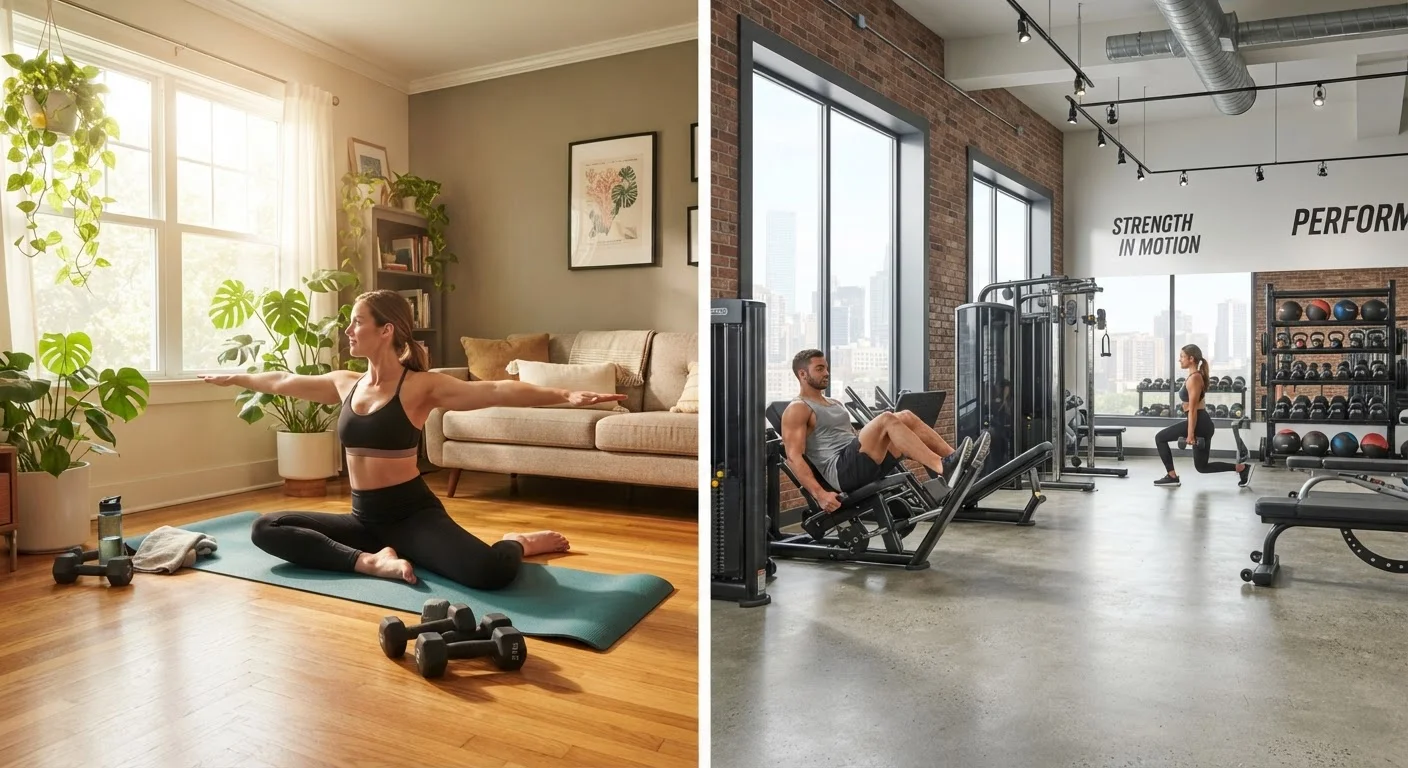
Photo credit: TheBlogZappier.com | Simple Search, Credible Results
In this article
Both home and gym exercise have genuine advantages. This balanced look helps you decide which environment suits your goals and lifestyle.
Key Takeaways
- Neither environment is objectively superior - both can support meaningful, lasting fitness progress.
- Home workouts remove commute barriers and cost, making consistency easier for many beginners.
- Gyms provide access to specialized equipment, professional guidance, and social accountability.
- Your goals, schedule, budget, and personality traits all influence which setting suits you better.
- Many people find that combining both approaches works better than committing exclusively to one.
- Always consult a healthcare professional before starting a new exercise routine, especially with existing health conditions.
What Each Environment Actually Offers
Home workouts and gym sessions are genuinely different experiences, not just different locations. Understanding what each provides helps clarify which aligns with your goals and circumstances.
Home workouts centre on accessibility. There is no commute, no membership fee, and no waiting for equipment. Bodyweight exercises - push-ups, squats, lunges, planks - require nothing but floor space and commitment. Adding resistance bands, a set of adjustable dumbbells, or a pull-up bar expands options considerably without major expense. Online platforms now offer structured programmes across every fitness level, making guided instruction widely available.
Gym sessions offer infrastructure that is difficult to replicate at home: barbells and weight racks, cable machines, cardio equipment, swimming pools, and stretching areas. Many gyms also provide access to certified personal trainers, group fitness classes, and a dedicated social environment. For those pursuing specific goals like powerlifting, swimming, or supervised rehabilitation, a gym may be the only practical setting.
| Criterion | Home Workouts | Gym Sessions |
|---|---|---|
| Upfront cost | Low to moderate (minimal equipment) | Membership fee required |
| Convenience | No commute, any time | Requires travel and scheduling |
| Equipment variety | Limited without investment | Extensive range available |
| Social environment | Typically solitary | Community and classes available |
| Expert access | Online resources only | Trainers often on-site |
| Privacy | Complete privacy at home | Shared public space |
| Progressive overload | Requires planning and investment | Straightforward with full weight range |
Neither option automatically produces better fitness outcomes. Research generally supports the idea that adherence - actually doing the exercise regularly - matters more than the specific setting. For a deeper look at why regularity often outweighs session intensity, see why consistency beats intensity.
Honest Trade-Offs to Consider
Both environments come with real limitations worth acknowledging before you commit.
Home Workout Limitations
- Progressive overload is harder to manage without a full range of weights. Building significant muscular strength over time typically requires increasing resistance, which demands either purchasing more equipment or using advanced technique progressions.
- Distractions are real. Household responsibilities, family members, and general home environment can interrupt focus in ways a gym setting does not.
- Motivation can fluctuate without external accountability. Some people find that leaving home specifically to exercise creates a mental transition that supports consistency.
Gym Session Limitations
- Commute and scheduling create friction. If a gym is 20 minutes away and you have a packed schedule, a session that takes one hour becomes 80 minutes in practice.
- Cost varies widely, but gym memberships represent an ongoing expense. This can feel like pressure rather than motivation when life gets busy.
- Intimidation is a genuine barrier for some beginners. An unfamiliar environment with experienced exercisers can feel unwelcoming, though many gyms actively work to counter this.
~30%
Gym members who stop attending regularly within months
Industry estimates consistently suggest a significant proportion of new gym members reduce attendance substantially within the first three to six months of joining.
150 min
Weekly moderate activity recommended by health guidelines
The U.S. Department of Health and Human Services Physical Activity Guidelines for Americans recommend at least 150 minutes of moderate-intensity aerobic activity weekly for adults.
For those exploring how training format affects experience beyond just the location, group exercise vs. solo training covers a related dimension worth considering.
Building a Sustainable Approach
Sustainability is the metric that matters most for long-term health. A rigorous gym programme you abandon after six weeks delivers fewer benefits than modest home sessions you maintain for years.
Consider starting with whichever option removes the most friction from your current life. If finances are tight or scheduling is complicated, a home routine built around bodyweight movement and a few resistance tools is a legitimate, evidence-supported starting point - not a compromise. If you respond well to structure, social energy, or need equipment-specific training, a gym membership may deliver the consistency trigger you need.
Many people find a hybrid approach works well: gym sessions two or three times per week for structured training, supplemented by shorter home sessions on other days. This balances equipment access with scheduling flexibility.
Before committing to either path, it is worth doing a brief self-assessment of your goals, current fitness level, and lifestyle constraints. The self-assessment checklist before starting a new routine can help you think through these factors systematically. And once you have chosen an environment, pairing cardio and strength work effectively will influence your results - finding the balance between strength training and cardio offers useful guidance on structuring both.
This article is for general informational and educational purposes only and does not constitute medical or fitness advice. Consult a qualified healthcare professional before beginning any new exercise programme, particularly if you have existing health conditions, injuries, or specific medical concerns.

Author
Health & Wellness Editorial Team
Health & Wellness Editorial Team is the collective byline for our editorial team and contributor network. Articles published under this byline or an editorial pen name are researched, written, and reviewed according to our editorial standards for clarity, consistency, and independence before publication.
View all articles →